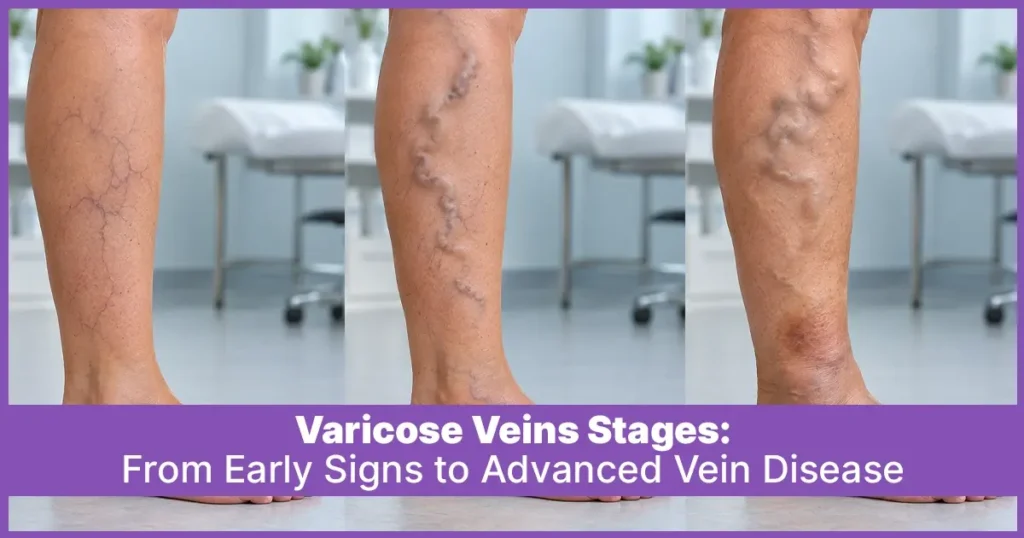
Varicose veins may progress over time and appear quite differently in each individual. Some may only see slight visible veins or experience slight leg heaviness, while others experience leg swelling, skin changes, or more serious complications.
Understanding the different stages of varicose veins can help you recognize how vein disease progresses, identify potential symptoms at each stage, and determine when it may be time to consult a vein specialist for proper evaluation and treatment.
Patients can get an expert assessment and tailored treatment advice at Chicago Vein Centers, depending on the extent of their vein condition.
What Are Varicose Veins?
Varicose veins are veins that are enlarged, bulging, and twisted and that are usually found in the legs. These occur when the valves in the veins don’t work correctly.
Vein valves keep the blood flowing towards the heart. If these valves fail to work properly or develop a weakness, blood can reflux and pool in the vein. This can lead to the vein swelling and thereby add pressure to the vein, causing it to grow over time.
In some individuals, varicose veins could be linked to underlying chronic venous insufficiency and may not be merely a cosmetic issue.
Understanding the Stages of Varicose Veins
Venous disease is assessed by the CEAP classification system, which is useful in describing the severity of visible and clinical changes.
The symptoms and outcomes of varicose veins can progress from mild symptoms and small visible veins to swelling, skin damage, and venous ulcers in more severe cases.
Not all people go through all the stages. For some, symptoms may be mild for years, and some may get worse with time.
Stage 1: Early Symptoms Without Visible Veins
Sometimes, the initial signs of varicose veins can develop before the veins themselves are large enough to see.
If you have symptoms, they may include:
- Leg pain or legs feeling heavy.
- Leg fatigue
- Mild burning/tingling
- Nighttime leg cramps
- Pruritus of the legs
- Pain that occurs when standing or sitting for extended periods of time
These symptoms may become more prominent in the latter part of the day.
People may not notice any bulging veins at this stage, so symptoms are often neglected or misdiagnosed as being due to general tiredness.
If leg pain is frequent, particularly when standing for extended periods, a physical exam with a doctor might be useful to see if circulation issues are a factor in their pain.
Stage 2: Spider Veins and Small Visible Veins
Spider veins are one of the first visible symptoms of venous disease.
Spider veins are small red, purple, or blue blood vessels that can be seen close to the skin surface. They are usually grouped together in clusters similar to a web or branches.
Unlike varicose veins, spider veins are typically smaller but can be a sign of circulation changes.
Some people may have spider veins but not experience any symptoms; others may feel slight aching, itching, burning, or heaviness.
A vein specialist may consider at this point whether the obvious veins are a purely cosmetic problem or if there is deeper venous insufficiency.
Stage 3: Enlarged Varicose Veins
As the vein disease gets worse, larger varicose veins can form.
These veins may look:
- Raised
- Twisted
- Rope-like
- Blue or purple
- Protruding under the skin
This is one of the most obvious stages of varicose veins.
Symptoms can be observed here. Aching, pressure, throbbing, itching, or heaviness in the affected leg may be experienced.
Symptoms can get worse with prolonged standing, but improve with rest or leg elevation.
Treatment options can be considered based on the size and location of involved veins, and if there is an underlying vein problem.
Stage 4: Swelling in the Legs or Ankles
Poor return of blood flow to the heart from damaged veins can cause fluid to accumulate in the lower legs and ankles.
This is called an “edema”.
Symptoms start at the end of the day and then go down during the night. As this disease gets worse, the swelling may become more permanent.
Some other symptoms can be tightness in the legs, pain around the ankles, or trouble fitting shoes that are usually comfortable.
If leg swelling does not resolve, it should be assessed, as there are many different illnesses that can lead to swelling in the legs, such as venous disease and other circulatory and systemic diseases.
Stage 5: Skin Changes Around the Lower Legs
As the venous insufficiency progresses further, it may start to affect the skin, especially around the ankles and lower legs.
Skin changes may consist of:
- Discoloration with a brown or reddish hue
- Dry or itchy skin
- Thickened skin
- Hardened tissue
- Inflammation
- Increased sensitivity
This happens over a period of time and is often due to the pressure of the veins over the surrounding tissue.
Brown discoloration can happen when blood cells leak into surrounding tissues, and the iron-containing pigments stay under the skin.
If skin changes are detected, it may indicate that venous disease has become a more serious issue than cosmetic.
Stage 6: Healed Venous Ulcers
Occasionally, individuals affected by severe vein disease end up with venous ulcers, or open sores that develop at the ankle.
In a person who has had an ulcer healed, but still has symptoms of chronic venous disease, the disease may still be at an advanced stage.
History of previous ulcers means that the problem with circulation is likely to continue and needs to be monitored.
Treatment for venous insufficiency can prevent further skin damage or re-formation of ulcers.
Stage 7: Active Venous Ulcers
One of the most developed symptoms of chronic venous insufficiency is an active venous ulcer.
It is common for these wounds to occur around the lower leg or ankle and can heal slowly due to the poor circulation in that area.
Signs may consist of drainage, discomfort, swelling, discoloration, or inflammation around the wound.
Medical treatment is necessary for venous ulcers. The treatment is typically centred on treatment of the wound and vein disease.
Can the Early Stage of Varicose Veins Be Managed?
Early signs of varicose veins may give patients the opportunity to manage symptoms before they become more of a nuisance.
Healthy walking routines, avoiding extended sitting or standing, maintaining a healthy weight, keeping the legs raised as needed, and prescribed compression stockings may help healthy circulation.
These can help control symptoms, but they do not necessarily repair damaged vein valves.
Your vein doctor can tell if more treatment is needed.
How Are Varicose Veins Diagnosed?
Evaluation typically starts with a physical exam and a discussion of symptoms.
A duplex ultrasound examination is sometimes suggested. This is a non-invasive imaging test that helps doctors determine blood flow and detect veins with faulty valves or abnormal blood flow.
Knowing where and how severe the vein issues are can assist in the decision-making process on the best treatment strategy.
Treatment Options for Different Varicose Vein Stages
Today, vein treatments are performed with minimal incisions and may be performed without surgery to treat unhealthy veins.
Treatment can be sclerotherapy, endovenous laser treatment, radiofrequency, or other vein procedures depending on the diagnosis.
It depends on the size of the vein, symptoms, ultrasound evaluation, general health, and the stage of varicose veins at which they are in.
A thorough evaluation by a specialist can be used to suggest a personalized treatment plan.
When Should You See a Vein Specialist?
If your leg pain is chronic, you have swelling, you can see bulging veins or discoloration in the skin, skin inflammation keeps coming back, or skin sores don’t heal, see a health care provider for help.
You should seek prompt medical attention if it seems to swell up quickly, feels very painful, is warm, red, you are short of breath, or you have chest pain; you should seek immediate medical attention in case the symptoms may be a sign of a more serious medical condition.
Learn More About Varicose Vein Treatment at Chicago Vein Centers
Varicose veins may be asymptomatic or more severe, involving circulation issues. Awareness of the various varicose vein stages can help facilitate the diagnosis of symptoms and provide more effective treatment.
Chicago Vein Centers offers options for evaluation and treatment of patients with venous conditions and varicose veins. If you’re suffering from early signs and symptoms of varicose veins, or later signs and symptoms of swelling and skin discoloration, an expert vein assessment can assist you in recognizing the cause and what to do next.