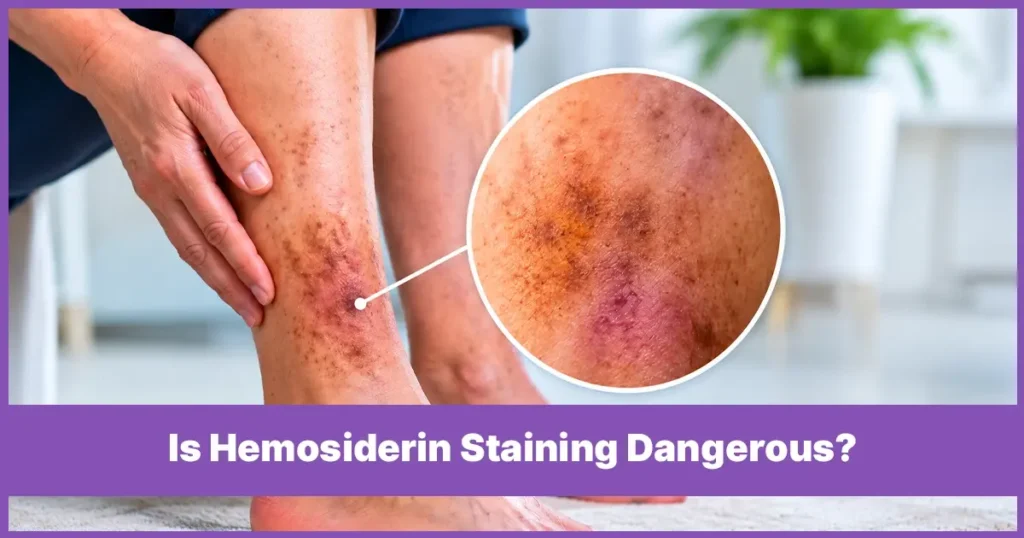
If you notice brown, rust-coloured patches or bruises on your lower legs, this is hemosiderin staining. This can even trigger chronic venous insufficiency, and it is a telltale sign of an underlying vascular issue. This condition needs immediate attention to avoid complications. If your lower legs reveal such a noticeable dark stain, you naturally wonder: Is hemosiderin staining dangerous?
The next thing people want to know is how to treat it and whether it is ever treatable. These changes on the skin surface can be cosmetic, but in many cases they appear as circulatory problems, discomfort, aches, and pain. Let’s discuss these symptoms in detail to know what is actually happening beneath the skin surface and what the best treatment options are.
Understanding Hemosiderin Staining
Before you jump to the treatment options, let’s first explore what it actually is. Hemosiderin staining is apparently skin discolouration typically caused by thick iron deposits. Bruises, like dark spots or discoloured skin patches, are due to blood leakage out of the tiny vessels. When these escaped red blood cells enter the tissues, breakdown occurs, and iron is released and settles as a residue of hemoglobin under the skin.
This is how yellow, brown or reddish patches become noticeable around the ankles, feet, and shins. These apparently temporary bruises never fade quickly and gradually reveal malfunctioning of your veins. This staining silently puts pressure on your vascular circulatory system, finally leading to Chronic Venous Insufficiency (CVI).
What are the Causes of Hemosiderin Staining?
This vascular condition is the result of blood vessel leakage in your legs, causing hemoglobin to be stored as hemosiderin. Immune system cells come into play to clear up some of the excess iron released into the skin, but in most cases this condition becomes overwhelming, causing staining. There are multiple triggering factors linked with hemosiderin staining, including:
- Varicose veins
- Trauma
- Leg edema
- Diabetes mellitus
- High blood pressure
- Venous ulcers
- Venous hypertension
- Poor hydration and diet issues
- Restricted physical movement
- Prolonged sitting or standing
- Various underlying medical conditions
If hemosiderin staining is the side effect of your skin injury or certain treatments, this will likely disappear on its own. Staining due to any medical condition such as cardiovascular disease, circulatory problem, or vascular problem may last long. Patients may expect little improvement in pigment over time, but this is not obvious in all cases.
Is Hemosiderin Staining Threatening?
Pigmentation itself is not dangerous but a clear sign of an underlying vein problem that is often serious. Discolouration on the skin surface is an indication of poor blood circulation that can lead to irritation, chronic pain, leg infections, ulcers and even other serious medical conditions.
Whatever conditions are involved in damaging blood vessels ultimately impact the surrounding tissues, causing fluid pooling and circulatory interruption in that area. The localised hemosiderin staining can lead to the following problems.
- Dermatitis
- Venous eczema
- Thrombophlebitis
- Cellulitis
- Vein ulcers
How to Differentiate Hemosiderin Staining and CVI
Both vascular problems can appear at once, but there are slight differences to draw the distinction between the two conditions.
- Overall Appearance
In hemosiderin staining photos, discoloration occurs without causing any pain or swelling in the early stages. CVI may cause itchy skin, varicose veins or intense swelling.
- Symptoms
Staining itself is a pigment which is painless before it worsens, whereas CVI comes along with heaviness, throbbing sensations and even severe aching.
- Progression
Hemosiderin staining is a gradual process with minimal impact on movement, whereas CVI becomes chronic over time.
- Lifestyle Role
Daily habit management can easily address staining. CVI requires lifestyle changes and medical intervention for a long-term solution and streamlined circulation.
Why Early Treatment Matters in Hemosiderin Staining
Whether you notice hemosiderin staining on feet or legs, don’t neglect it. It may feel harmless in early stages. In most cases, this ends up in intense discomfort and mobility-related issues. If staining is left untreated, this can lead to chronic vein diseases, swelling, pain, and even vein ulcers.
Paying early attention can help your vein specialist understand the underlying problem. Early treatment prevents complications, ensures symptom management and proper blood circulation. Timely treatment can protect both skin and overall leg health.
Best Treatment Available for Hemosiderin Staining
If you want to know hemosiderin staining treatment options available to reduce staining for any possible reason, this is for you.
- Stay Mobilised for Healthy Circulation
Regular physical movement ensures proper circulation. Different leg-focused activities such as gentle stretching, simple walking and calf muscle exercises avoid blood pooling in the leg veins. More importantly, also avoid wearing tight clothes
- Topical Creams and Gels
There are different skin creams that can lighten dark spots. Such creams contain hydroquinone to address discolouration. Some topical gels are also available to reduce pigment over time.
- Wear Compression Stockings
Some vein specialists also recommend compression apparel to manage venous problems. These customised garments are perfect for the leg veins. Consistent use of these compression garments reduces swelling, improves comfort level and reduces the progression of skin discolouration.
- Laser Therapy
Intense Pulsed Light (IPL) sessions are helpful for treatment of hemosiderin staining. The number of sessions is entirely based on how deep the pigments are and where they are located. Laser therapy breaks down the hemosiderin deposits. However, the removal of the entire stain is not guaranteed. Most importantly, laser treatment can significantly improve the cosmetic appearance of the skin.
In a Nutshell
Hemosiderin staining can appear on any part of the body, but the lower legs are the common target. The staining alone is not harmful. But the signs can be alarming if you delay. If you notice a discoloured part of your skin or experience other skin-based changes such as swelling, bleeding, itching, redness or unusual warmth, schedule an appointment at Chicago Vein Centers to discuss the possible reasons and treatment plan.