An irregularly colored, patchy, red, purple, blue, or whitish skin on the legs may be worrisome. In many instances, skin mottling can occur for a short time because of temperature or blood flow alterations. But other times the color can last a long time, and this can be linked with circulation or vascular disease.
Having a good idea of what mottled skin is, what causes it, and whether it’s connected with poor circulation or not can help you determine when you need professional consultation.
What is Mottled Skin?
Mottled skin is a mottling or patching of the skin that is caused by altered blood flow through small blood vessels near the skin.
The look may differ from one individual to another. A purplish or reddish discoloration is seen in some and a whitish or bluish discoloration in others. The pattern might be present for a shorter or longer time.
Changes in circulation may be more apparent in the legs, arms, hands, and feet, and often manifest themselves as mottling of the skin.
Sometimes, mottling disappears when the skin warms up. Otherwise, if the skin changes are continuing, it may be a sign that blood flow should be checked.
What Does Mottled Skin Look Like?
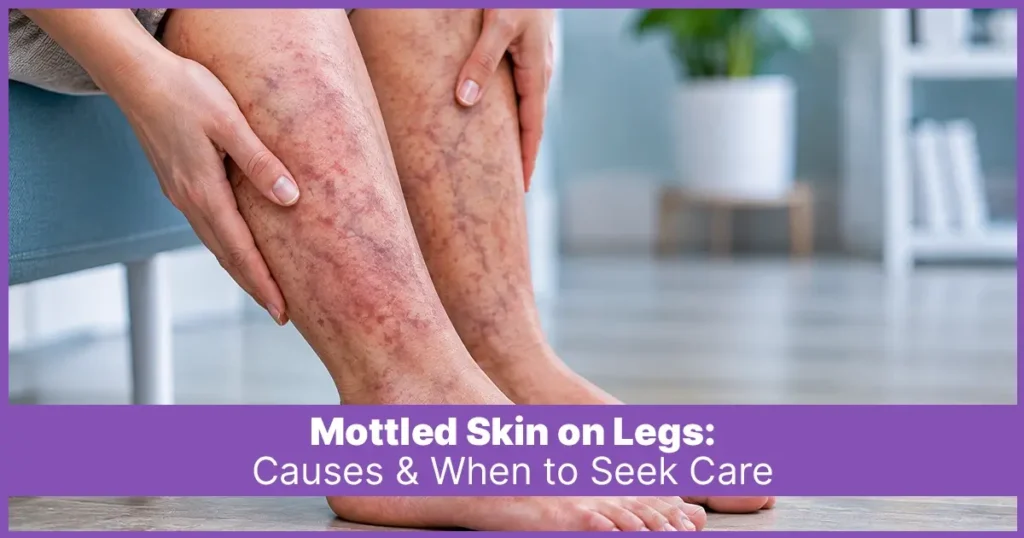
If you are unsure what mottled skin looks like, it is normally mottled in an irregular or net-like pattern.
These can include:
- Red or purple patches
- Bluish skin discoloration
- Pale or white areas
- A spotted or mottled look
- Uneven skin tone
- Spotty color changes that occur and fade
- Changes that are more apparent during cold weather.
What Causes Mottled Skin on Legs?
The cause of mottled skin on legs may be due to several causes. Some of these causes are temporary and not serious; others may involve circulation or blood vessel issues.
Cold Temperatures
Cold temperatures can make small blood vessels close up near the skin. This will temporarily constrict the blood flow and could make the skin look blotchy or mottled. After the body has warmed up, the skin may return to a normal color.
Blood circulation changes
Good circulation can be maintained in the legs by healthy arteries and veins. Poor or disrupted blood flow may result in color changes to the skin.
Poor circulation may also be accompanied by symptoms such as:
- Leg heaviness
- Swelling
- Aching
- Cramping
- Numbness
- Tingling
- Skin temperature changes
If these symptoms persist with skin changes, it could be a problem with the blood vessels.
Venous Insufficiency
Chronic venous insufficiency is a condition in which veins in the legs become insufficient in carrying blood towards the heart.
The vein valves in the lower leg may become weak or damaged, causing blood to collect in the leg. This can result in changes over time that will be visible, for example, swelling, discoloration of the skin, and varicose veins.
Mottling is not a good enough diagnosis of venous insufficiency; however, the more you see, the more significant it is when accompanied by swelling, prominent veins, or leg pain.
Varicose Veins
Varicose veins are enlarged veins that become twisted as a result of incompetence of the vein valves.
They may cause symptoms such as:
- Aching legs
- Heaviness
- Burning
- Itching
- Swelling
- Skin discoloration
Those with severe vein problems may experience skin changes at the ankles and lower legs.
Blood Vessel Changes
At other times, the mottling in the skin may be due to brief alterations of small blood vessels underneath the skin. The pattern may be more apparent at times of reduced blood flow and/or with exposure to colder temperatures.
This can manifest itself in some people as a lace pattern, purple or reddish.
White Spots on Legs and Circulation
Occasionally, white spots on legs are related to circulation, and circulation changes are thought to be due to diminished blood flow.
There are a number of causes for spots on the legs, which may be white or light. Some may be related to changes in blood circulation or vessels; others may be related to pigmentation changes, sun exposure, skin conditions, or inflammation.
If pale spots are seen with cold feet, numbness, leg pain, color changes, swelling, or slow healing of wounds, further evaluation of circulation is indicated.
If there is any risk of there being a vascular problem, a health care professional may be able to examine the legs and may arrange for further tests.
Mottling of Skin and Poor Circulation
The association of skin color with circulation is tied to the fact that skin color is related to the quantity of oxygen-rich blood in tissues.
If the blood flow is temporarily diminished or irregular, blood vessels may produce a visible color change in the skin below.
Several skin symptoms can develop due to poor circulation, such as:
- Organic matter that turns blue or purple.
- Pale skin
- Redness
- Cold feet or legs
- Swelling
- Slow-healing wounds
- Changes in skin texture
When Should You Be Concerned About Skin Mottling?
If the mottling of skin occurs regularly from exposure to cold temperatures, this may be nothing to worry about, as it may clear up when the body warms up.
If mottling does occur, however, a medical evaluation may be warranted:
- Happens frequently
- Does not disappear
- Becomes more noticeable over time
- Affects primarily one leg
- Includes swelling that is noticeable or substantial.
- Is accompanied by blistering pain.
- Is associated with numbness/weakness
- Develops around wounds that are slow to heal
- Appears together with major changes in skin temperature
Any sudden changes in coloration and severe pain or swelling of the leg should be assessed immediately.
How Are Circulation Problems Diagnosed?
If any symptoms of mottled skin appear to be connected to circulation, your health care provider will take a look at your medical history, symptoms, and the look of your legs. Based on the results, a vascular test might be suggested.
Duplex ultrasound is a common test to assess the function of the vein. The test performed is a non-invasive assessment to look for blood flow issues and determine if the veins are functioning well.
Finding the cause of the problem is important because treatment will be based on whether it is caused by veins, arteries, skin, or another medical condition.
Is there any treatment for mottled skin?
The treatment for skin mottling is dependent on the cause. A temporary “mottling” resulting from cold exposure might improve as the body warms. If circulation or venous disease is involved, treatment is geared toward enhancing circulation and addressing the underlying vascular condition.
Treatment will depend on the diagnosis and could involve:
- Walking and regular exercise to reduce extended periods of sitting or standing.
- Raising legs as appropriate
- Maintaining a healthy weight is crucial.
- Wearing compression stockings as indicated
- Treating underlying vein disease
There are modern treatments for those who have chronic venous insufficiency or problematic varicose veins.
When to Visit a Vein Specialist
Don’t assume that if it is discolored, it is cosmetic. When varicose veins are accompanied by mottling of skin, swelling, aching, heaviness, burning, or other circulatory problems, a vein specialist can assess to see if venous disease is the cause of the mottling.
Chicago Vein Centers offer patients an evaluation for symptoms of poor vein circulation and chronic venous conditions. Correct vascular assessment may be able to reveal the cause of leg symptoms and whether or not treatment is needed.
Final Thoughts
Mottled skin on legs may occur for a variety of reasons, including short-term exposure to cold, circulation problems, and more.
If the mottling appears occasionally and goes away, it is probably not a cause for concern. If any discoloration, swelling, pain, visible veins, numbness, or skin wounds persist, it should be evaluated.
You will know what mottled skin is, what mottled skin looks like, and the symptoms of poor circulation, which will help you determine when you should get professional advice.
Chicago Vein Centers can help to identify the state of your veins and what steps to take if you are having persistent leg-color changes or signs of circulation issues.