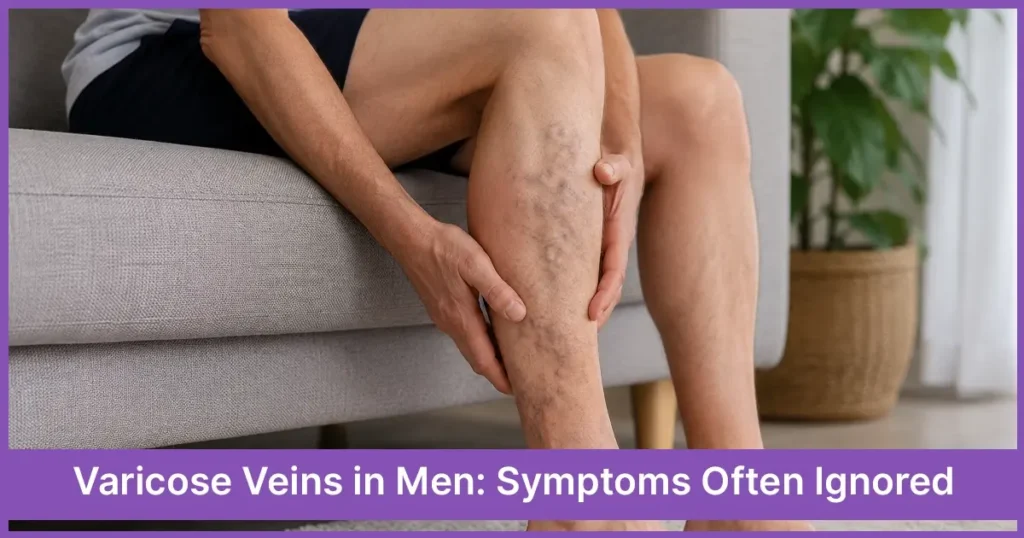
Whenever an individual hears the word varicose veins, he or she may imagine women. The marketing programs, health blogs and even a simple conversation are more likely to cater to women, especially when they are pregnant or aging.
But here’s the truth: men get varicose veins too and often ignore them until they become serious.
Such careless silence may result in chronic pain, decreased ability to move, and even harmful complications. It is time to explore the reasons varicose veins in men are ignored, the symptoms to be expected, and when to turn to medical care.
What Are Varicose Veins?
Varicose veins are swollen and bulged out veins that mostly occur in the legs. They form because of weakening or failure of the small valves found in the inside of the veins, which lead to the stagnation of blood rather than its effective movement back to the heart. As time passes, this pooling pressure puts pressure on the inside of the veins, causing them to end up being enlarged and swollen.
Although they are commonly regarded as a cosmetic complication, varicose veins are in fact a circulatory condition and in men they are commonly underdiagnosed since symptoms are not heeded.
Why Men Ignore Varicose Vein Symptoms
Men are likely to disregard this condition because of several reasons:
1. “It’s Just Tired Legs”
Most men complain that heavy legs or sore legs are due to:
- Long work hours
- Standing all day
- Intense workouts
- Aging
They do not think about the circulation issue but believe that it is ordinary fatigue.
2. Cosmetic Concerns Are Dismissed
Men do not want to be treated as something considered to be merely a show of appearance. However, venous varicose are not aesthetics only, they may be the signs of chronic venous insufficiency.
3. Late Medical Consultation
Men wait long before they visit preventive healthcare, and in most cases, in favor of attending such a clinic when they already have some serious pain or complications.
Common Symptoms of Varicose Veins in Men
The following are the symptoms that are often disregarded by men:
1. Leg Heaviness
Constant feeling of weightiness, particularly at the end of the day.
2. Aching or Throbbing Pain
Semi-sharp pain, which increases with protracted standing or sitting.
3. Swelling in Lower Legs or Ankles
Even a little swelling can be harmless, but it is an indication of poor circulation.
4. Itching Around Veins
Skin near visible veins may be dry and irritated, which could be a sign of vein pressure.
5. Night Cramps
The common ones are muscle cramps, especially at night, which are associated with venous problems.
6. Skin Discoloration
Slate gray or purple discoloration of the skin near the ankles may be an indicator of end stage vein disease.
7. Non-Healing Sores
Ankle venous ulcers are severe complications that should be taken care of. Unattended varicose veins may develop to:
- Chronic venous inadequacy.
- Blood clots
- Deep vein thrombosis (DVT)
- Venous ulcers
Risk Factors Specific to Men
Although both sexes can get varicose veins, there are certain lifestyle habits that are usually associated with men and make them at risk:
• Prolonged Standing Jobs
Retail employees, factory employees, surgeons, and construction workers are particularly susceptible to the situation.
• Heavy Weightlifting
Straining elevates the pressure of the abdomen that influences the functioning of veins.
• Obesity
Excess weight strains lower limb veins.
• Family History
Genetics plays a major role.
• Smoking
Smoking destroys blood vessels and undermines circulation.
• Sedentary Lifestyle
Increased risk is caused by long hours at desks or driving.
When Should Men See a Doctor?
You are also advised to consult the doctor when you experience:
- Persistent leg pain
- Unresponsive swelling.
- Skin changes around ankles
- Bleeding from a vein, sharp pain or warmth of legs.
Complications can be avoided by early diagnosis, and the quality of life can be improved.
Modern Treatment Options
The good news? Today treatment is a lot less invasive than people would expect. Depending on the severity, the alternatives can be:
1. Compression Stockings
Improve blood flow and reduce swelling.
2. Lifestyle Changes
- Regular exercise
- Weight management
- Elevating legs
- Avoiding prolonged sitting or standing
3. Minimally Invasive Procedures
- Endovenous laser treatment
- Radiofrequency ablation
- Sclerotherapy
These procedures are typically outpatient and require minimal downtime.
Why Early Action Matters?
Ignoring varicose veins doesn’t make them disappear. Over time, untreated vein disease can lead to:
- Chronic pain
- Reduced mobility
- Skin damage
- Risk of clot formation
Addressing symptoms early improves long-term vascular health and prevents complications.
Breaking the Stigma
Varicose veins are not strictly a women’s issue. They are a health disorder that takes place in millions of men across the world. Doing something is not a matter of image; it is a matter of circulation, movement, and general health.
Men are concerned about performance in the gym, development of the career and family. However, when one disregards swelling or pain in the legs, it can silently compromise efficiency and long-term health.
Final Thoughts
When you see the veins swell, your legs feel heavy, your legs swell or you have continuous aching do not ignore it. It is the body that gives you signs that issues are their way before they are an emergency. Men are prone to varicose veins. Early intervention is not the norm. Listen to your symptoms. Take them seriously.
And when the occasion arises, seek medical advice at Chicago Vein Centers and prevent a minor unpleasant experience from developing into a significant complication.