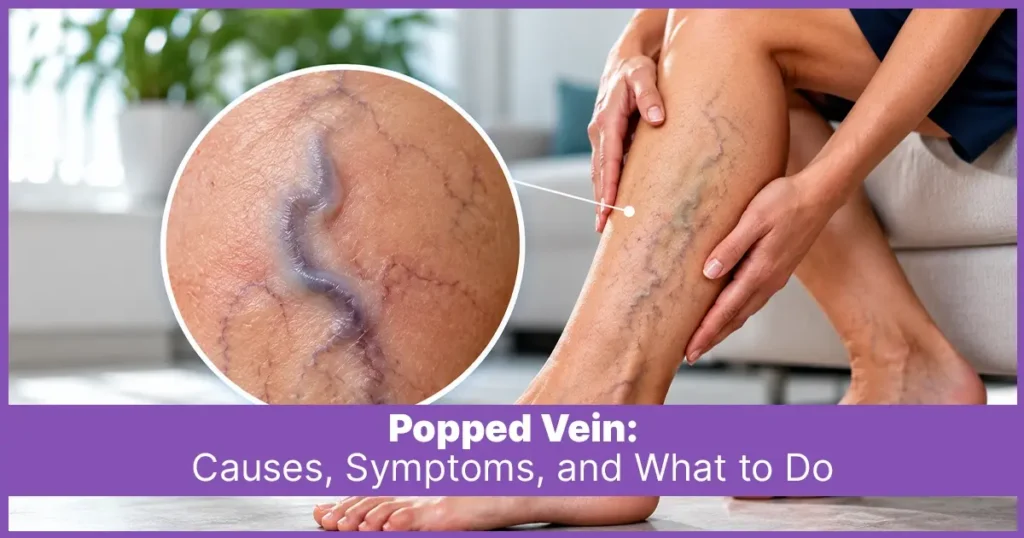
The popping of a vein can be frightening, particularly if you notice bruising, swelling, discoloration, or bleeding under the skin. The problem can also be referred to as a popped blood vessel, burst vein, ruptured vein, or broken vein. While these terms might be interchangeable, they can apply to different scenarios, from a small breakdown in a blood vessel to a more severe vein problem that does require medical treatment.
Knowing the causes of vein damage, symptoms to look for, and when to treat them can mean knowing how to handle them. The vein specialists at Chicago Vein Centers assess the patient’s circulation issues and can determine if there are visible or bothersome vein changes that require additional treatment.
What Is a Popped Vein?
In general, a “popped vein” is a vein that has been broken or injured, causing blood to seep into surrounding tissue. A vein rupture can lead to a small bruise, swelling, tenderness, or bleeding into the skin depending on the size and location of the involved blood vessels.
Small blood vessels close to the skin can break relatively easily. If this occurs, blood can pool under the skin, causing a red, purple, blue, or dark discoloration.
The walls of the veins are sometimes weakened by the passage of time, or the pressure within the vein may increase, causing the vein to rupture, especially in larger veins, and particularly where varicose veins are close to the skin surface.
So, do veins burst? Yes. The severity is dependent, however, on the vein involved, why it ruptured, and whether the bleeding is below or through the skin.
What Does a Popped Vein Look Like?
A ruptured vein will appear as a bulge and be quite noticeable. It may look very different depending on the vein affected.
A small blue or purple bruise is a small broken vein. Small blood vessels under the skin may also be visible as tiny red or purple vessels. Sometimes the affected area may be swollen or tender.
A ruptured varicose vein can look more noticeable! Blood can flow under the skin, creating a big bruise or blotchy area of colour. If the vein ruptures through the skin, the blood may be seen.
Possible signs include:
- Discoloration of the skin to blue, purple, red, or a dark appearance
- Swelling and bruising around the affected vein.
- Tenderness or soreness
- A vein that is elevated or enlarged.
- Warmth in the affected area
- Blood from an open vein
- A point or place that is either firm or sensitive under the skin.
Bleeding or bruising into the vessels does not always indicate that a major vessel has broken apart. An examination may be useful to rule out what may be causing the symptoms.
What Causes a Vein to Blow?
For those curious about what makes a vein blow, there are a few things that could be involved.
A common cause is physical injury. A bump, fall, sports injury, or pressure on a superficial vein may tear the blood vessel’s wall and allow blood to seep into the surrounding tissue.
Another is the insertion of needles. A vein can sometimes be damaged during blood draws, IV placement, or medical procedures. This is sometimes referred to as a “blown vein. The blood may seep out from under the injection site, making it bruised, swollen, or tender.
There is also a possibility that varicose veins are more prone to rupturing. These enlarged veins are caused by damaged valves, which cause the blood to back up in the vein. As time goes on, the high pressure can cause the walls of the vein to stretch and weaken.
Other possible sources are:
- Weak blood vessels.
- Signs of ageing skin and veins.
- An increase in the pressure of the superficial veins.
- Varicose veins
- As a result of injury or repetitive pressure
- Some medications that cause bleeding or bruising.
- Needle-containing medical procedures
- Diseases associated with abnormal blood clotting.
It is important to know the underlying cause because the treatment for a simple bruise can be quite different from that of chronic venous disease.
What Happens If a Vein Pops?
A second concern is what will happen if a vein pops.
A vein bursts under the skin, causing the blood to seep into the tissue. This blood is slowly absorbed by the body, and that is why many bruises turn purple or blue, then green, yellow, and finally to normal skin color as they heal.
Some injuries will heal with little to no treatment.
If a larger superficial or varicose vein bursts, however, then more blood can build up underneath the skin. This can cause a lot of bruising, swelling, pain, and skin changes.
In the scenario of a vein rupturing through the skin, external bleeding may result. Since veins contain blood, bleeding from a ruptured varicose vein may be a serious condition, and it is advisable not to ignore it.
Is a Blown Vein Dangerous?
A patient will routinely ask, “Is a broken vein dangerous? A blown vein is not a serious condition, especially following an IV or blood sample. Generally, the damaged area will heal when the blood leaks away.
But not all popped veins are alike.
Look for immediate medical attention if you have heavy or prolonged bleeding, worsening swelling, intense pain, excessive warmth or redness, noticeable leg swelling, numbness, dizziness, or other alarming symptoms.
Repeatedly broken veins can also point to a problem with venous circulation elsewhere that should be investigated.
What Should You Do If a Vein Pops?
The treatment depends on whether the bleeding is underneath the skin or through the skin.
If it is a minor bruise or a blood vessel has popped, covering the area and preventing the area from being put under any more pressure might be sufficient. A cold compress will help to reduce swelling after a minor injury, if there is no reason you have been told to avoid cold therapy.
If a superficial vein is bleeding, use a clean cloth or gauze to make firm, continuous pressure. If possible, the raised limb will also help to relieve venous pressure.
Do not delay seeking urgent medical attention if your bleeding doesn’t stop quickly, is heavy, or continues after pressure is applied.
Under no circumstances should a ruptured vein be attempted to be punctured, drained, or treated by the patient.
Can Varicose Veins Rupture?
Yes. Varicose veins are dilated and tortuous veins usually seen in the legs. These veins are close to the skin and can sometimes burst upon relatively minor trauma, due to increased pressure.
Varicose veins may also cause symptoms like aching, heaviness, swelling, itching, cramping, skin discoloration, or discomfort following prolonged periods of standing among individuals with prominent varicose veins.
If a varicose vein has ruptured, it is worth considering that treatment of the underlying vein disease can help minimize future complications.
When Should You See a Vein Specialist?
It is advisable to seek professional help for an evaluation of veins when you have an unexplained tendency to bruising, varicosities, swelling, leg heaviness, painful varicose veins, skin discoloration, or vein bleeding.
If the bleeding is not controlled, the swelling suddenly becomes severe, or the pain is severe and sudden, you feel faint, short of breath, have chest pain, or you notice other serious symptoms, you should seek urgent medical attention.
At Chicago Vein Centers, a specialist can take a look at the affected veins, determine if there are any circulation issues, and then suggest the most suitable plan for your symptoms and vein health.
Take Changes in Your Veins Seriously
In some instances, a popped vein can signify a damaged varicose vein or another circulatory issue; at other times, it can be a trivial damaged blood vessel. It is crucial to understand how to recognize the difference between a casual blood vessel rupture and a potentially serious vein rupture.
If you experience bruising, swelling, a painful vein, visible veins, or if a vein starts to bleed, you may want to arrange an appointment with Chicago Vein Centers for an evaluation. Finding the root cause can help you understand what you are experiencing and whether treatment is needed.