Veins are essential in the body because they help in the circulation of blood to the heart. Under certain conditions, veins might be ruined or collapse, thereby complicating the circulation of blood. The most common questions that many people ask themselves is, what causes veins to collapse, is it serious, and can it be cured.
The causes, symptoms, and prevention of the collapsed veins are important to know. It helps to maintain good vein health and guarantee safe medical practice. Medical technology and providers such as Chicago Vein Centers enhance vascular solutions to minimize the chance of damaging veins.
This paper will discuss reasons why veins collapse, what a collapsed vein looks like, whether collapsed veins heal, and when to seek medical attention.
What Causes Veins to Collapse?
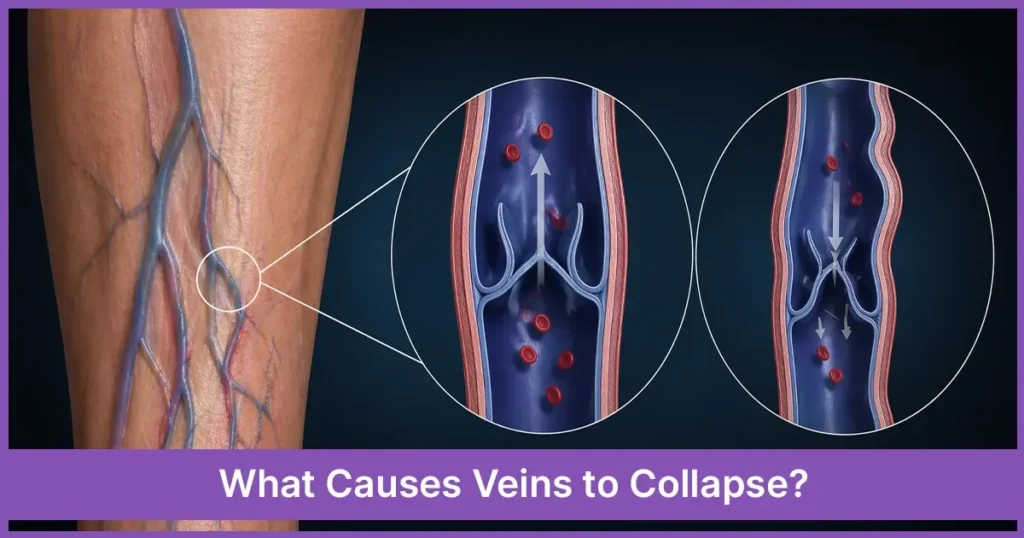
The answer to the question, “What causes veins to collapse? can be answered in a number of ways. Collapsing of veins occurs when the vein walls are weakened, irritated or damaged. This harm may be because of repeated injections dehydration, or underlying medical diseases.
Collapsing of a vein causes the walls of the vein to cave, thus limiting or obstructing blood circulation in that vessel. This may complicate the process of medical professionals reaching the vein.
Collapsed veins are caused by a number of factors.
1. Repeated Needle Use
Repeated needle insertions into the same vein occur to be one of the most widespread causes of vein collapse. This is often seen in:
- Frequent IV treatments
- Blood draws
- Long-term medical therapies
The repetitive puncture damages the walls of the veins and becomes irritable which culminates in a collapsed vein.
2. Dehydration
The dehydrated veins are small and weaker. There is a low amount of fluid in the body and the veins become shrunk and less pliant and more prone to collapse during blood removal or IV sticks.
That is why sometimes before surgery, medical personnel recommend taking fluids.
3. Aging and Weak Vein Walls
The elasticity of veins reduces as one grows old. Veins that are old are frailer and likely to fall down easily particularly during medical procedures.
4. High Pressure from Injections
Medication or fluids should not be injected too fast as this may put strain on the walls of the veins. Such pressure may result in irritation and ultimate vein collapse.
5. Medical Conditions
Some comorbidities can predispose one to collapsed veins and they include:
- Poor circulation
- Chronic illnesses
- Vascular disorders
- Long-term IV therapy
What Does a Collapsed Vein Look Like?
People often ask, what does a collapsed vein look like?
The rupture of a vein does not necessarily show up on the skin; however, the following signs can be present:
- The vein is flattened or not easily located.
- Perifocal bruising of the injection area.
- Swelling or tenderness
- A hardened or cord-like vein
- Less blood flow when trying to draw blood.
Why Do Veins Collapse During Medical Procedures?
Healthcare professionals frequently encounter collapsed veins during IV insertion or blood draws. This can occur when:
- The vein is too small to allow the needle.
- Veins are weak or they are already torn.
- The patient is dehydrated.
- The amount of suction applied during blood collection is exorbitant.
Recent technologies of vascular access and clinical training are meant to mitigate these risks. Such companies as Chicago Vein Centers make modern catheter systems and vascular access solutions which are aimed to protect the integrity of veins.
Do Collapsed Veins Heal?
A common concern is “do collapsed veins heal?”
The answer depends on the severity of the damage.
Temporary Collapse
In many cases, veins collapse temporarily due to irritation or pressure. The vein may recover after:
- Rest
- Reduced use of that vein
- Proper hydration
The body can reroute blood through nearby veins while healing occurs.
Permanent Damage
In case the vein has undergone considerable trauma or scarring, it may not reopen fully. Where such is the case, the clinicians must access the medical with alternative veins.
Fortunately, the circulatory system is highly endowed in veins and, as a result, blood circulation does not stop; instead, it flows via the surrounding veins.
Can a Collapsed Vein Kill You?
Many people worry about “can a collapsed vein kill you?”
A ruptured vein is not fatal in the majority of cases. There is a vast supply of veins in the body and in most situations, the blood flow may divert through the adjacent veins.
Nonetheless, there are complications that may arise when the collapsed vein causes:
- Infection
- Severe swelling
- Blood clots
- Poor circulation
If symptoms such as intense pain, redness, warmth, or fever appear, medical attention should be sought immediately.
Symptoms of Collapsed Veins
Symptoms of a collapsed vein may include:
- Pain or tenderness near the vein
- Bruising or discoloration
- Swelling
- Difficulty drawing blood
- Hard or rope-like veins under the skin
Healthcare professionals monitor these symptoms to determine the best treatment approach.
Preventing Collapsed Veins
While not all cases can be prevented, several steps can reduce the risk of vein collapse.
Stay Hydrated
To avoid getting dehydrated veins, it is always good to drink a lot of fluids prior to medical procedures wherever possible.
Rotate Injection Sites
Using the same vein time and time again disrupts the possibility of damage. The veins have time to heal as a result of moving injection sites.
Use Proper Medical Equipment
High-tech vascular access devices and catheters cause less pressure and trauma to veins..
Treatment for Collapsed Veins
The severity of the damage determines the treatment. Common approaches include:
- Resting the affected vein
- Applying warm compresses
- Staying hydrated
- Anti-inflammatory drugs (only when prescribed by a physician)
In the majority of instances, health care facilities do not utilize the affected vein and instead choose another location to treat.
Final Thoughts
Knowledge on the factors that, “what causes veins to collapse”: this also can guide patients and healthcare professionals to undertake measures to ensure the health of veins is maintained. Repeated use of needles, lack of proper injection methods, dehydration, and weakening of the walls of the veins are all common causes.
Even though collapsed veins are not typically dangerous, they may complicate the medical operations and necessitate different treatment methods. Luckily, a good number of veins heal. The technology of vascular access and better clinical practices, which are supported by such healthcare innovators as Chicago Vein Centers, still helps decrease the risk of vein damage and positively influence the patient’s outcomes.
The veins can be cured by keeping hydrated, proper medical procedures, and giving the veins time to get healed so that chances of collapsing can be mostly reduced.