When it comes to medical questions, even small things can be scary, especially those relating to veins. One question we’re frequently asked is, can a blown vein kill you? In short, the answer is no; blown veins don’t usually kill you. However, it’s important to understand what it is, its causes, and when it can pose health risks.
Here’s everything you need to know about blown veins, causes, symptoms, complications, and when to seek medical care.
What Is a Blown Vein?
A blown vein is when a vein bursts, usually during a medical procedure like an injection. The blood spills out and into the skin, causing bruising, swelling, or pain. This is also known as:
- Blown vein from IV
- Blown vein from blood draw
It might look scary but it’s usually harmless and will be resolved on its own.
Can a Blown Vein Kill You?
First, let’s answer the question: can a blown vein kill you?
The answer is: probably not. If you blow a vein, it typically results in a small wound that won’t affect the flow of blood or your organs. It may cause pain, bruising, or swelling, but generally, there’s no significant damage.
But, in rare cases, problems may occur if:
- The area becomes infected
- There is repeated damage to veins
- It happens in those with other conditions
Even in these patients, with good medical care, the risk is minimal.
What Does a Blown Vein Look Like?
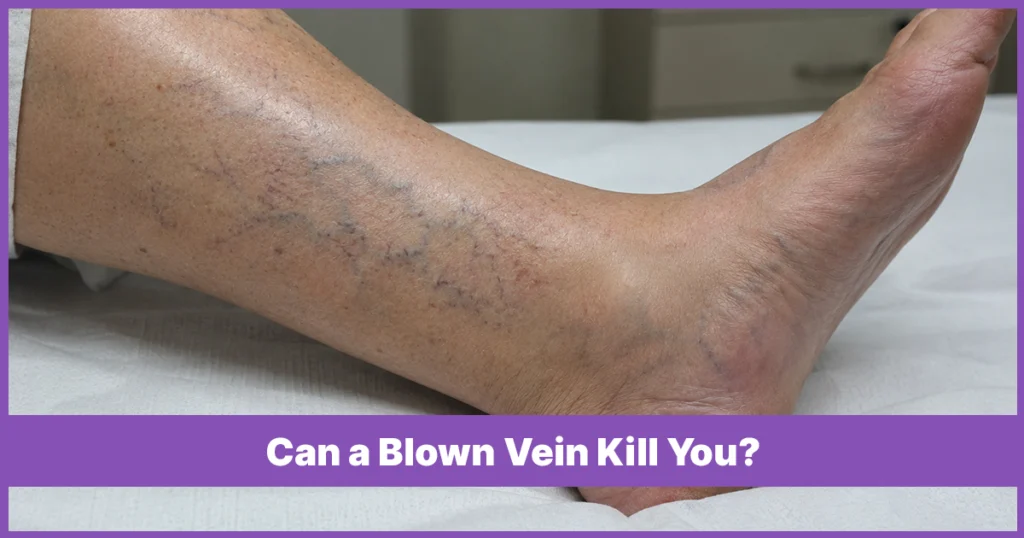
If you’re wondering “what does a blown vein look like”, here are some of the symptoms:
- Swelling at the site of injection
- Painful, swollen or bruised area (usually blue, red or purple)
- Mild to moderate pain
- Tightness in the area
- Warmth or tenderness
People may search for pictures of blown veins online. Images can be helpful, but it’s important to see a doctor for a diagnosis.
Common Causes of a Blown Vein
Blown veins are typically the result of small mistakes or difficulties. Some common causes include:
1. Improper Needle Placement
This can occur if the vein is not entered or if the needle passes completely through the vein.
2. Fragile or Small Veins
Certain people have more fragile veins.
3. Repeated Needle Use
This can cause veins to become fragile.
4. Movement During Procedure
Movement during injection can cause a vein to burst.
5. Dehydration
Veins in dehydrated patients are difficult to find and easily blown.
Blown Vein from IV vs Blood Draw
There are some differences between blown vein from IV and blown vein from blood draw:
Blown Vein from IV
- May be more painful (the needle was there longer)
- May lead to more swelling if fluid leaks out
- May need to remove the IV and start again
Blown Vein from Blood Draw
- Usually less severe
- Generally, causes slight bruising
- Resolves quicker and easier
It’s not life-threatening but should be kept an eye on.
Potential Complications (Rare but Important)
An untreated blown vein can have potential complications (although these are rare):
1. Infection
If the wound becomes infected, it may result in redness, warmth and pus discharge.
2. Phlebitis
This is an irritation of the vein, which is painful and swollen.
3. Hematoma
This can cause a larger blood collection, which may cause extensive bruising.
4. Nerve Irritation
In extremely rare cases, nerves can be irritated and cause a pins and needles feeling. If you have severe symptoms, see your doctor.
How to Treat a Blown Vein?
Blown veins will generally clear up in a few days to a couple of weeks. There are some things you can do to promote healing:
Apply a Cold Compress
Ice packs will help to reduce swelling for 24 hours.
Switch to Warm Compress
Warm packs increase circulation and promote healing after 24 hours.
Elevate the Area
Elevating the area will help with swelling.
Avoid Pressure
Avoid excessive strain and pressure.
Stay Hydrated
Keep your veins healthy and help them heal.
When Should You See a Doctor?
While it’s usually not serious, if you have blown a vein, contact your doctor if you:
- Severe or increasing pain
- Excessive swelling
- Redness, warmth or pus
- Numbness or tingling
Symptoms longer than two weeks must see a doctor, such as Chicago Vein Centers, assess your symptoms and ensure you’re getting the right treatment.
Can Blown Veins Be Prevented?
In many cases, blown veins can be prevented:
- Be well-hydrated prior to procedures
- Notify health professionals if you have weak veins
- Minimize movement during injections
- Rotate injection sites when possible
- opt for experienced practitioners
We prioritize vein health and use innovative techniques to reduce risks.
Long-Term Impact on Veins
One blown vein typically does not cause long-term damage. However, repeated injuries can lead to:
- Scarred veins
- Reduced vein function
- Difficulty in future IV access
That’s why it’s important to care for your veins and have it done by a professional. The experts at Chicago Vein Centers help keep people’s veins in tip-top shape, particularly those who need treatment often.
Final Thoughts
So, can a blown vein kill you? The short answer is no, it’s very unlikely. Blown veins are usually a minor medical issue that can be easily treated. But understanding the symptoms, risk factors and causes can help you decide what to do and stop problems.
Ask your doctor if you’re not sure. Your veins are vital to your health and by understanding the risks and knowing where to go for help from Chicago Vein Centers, you can keep your veins in good shape.